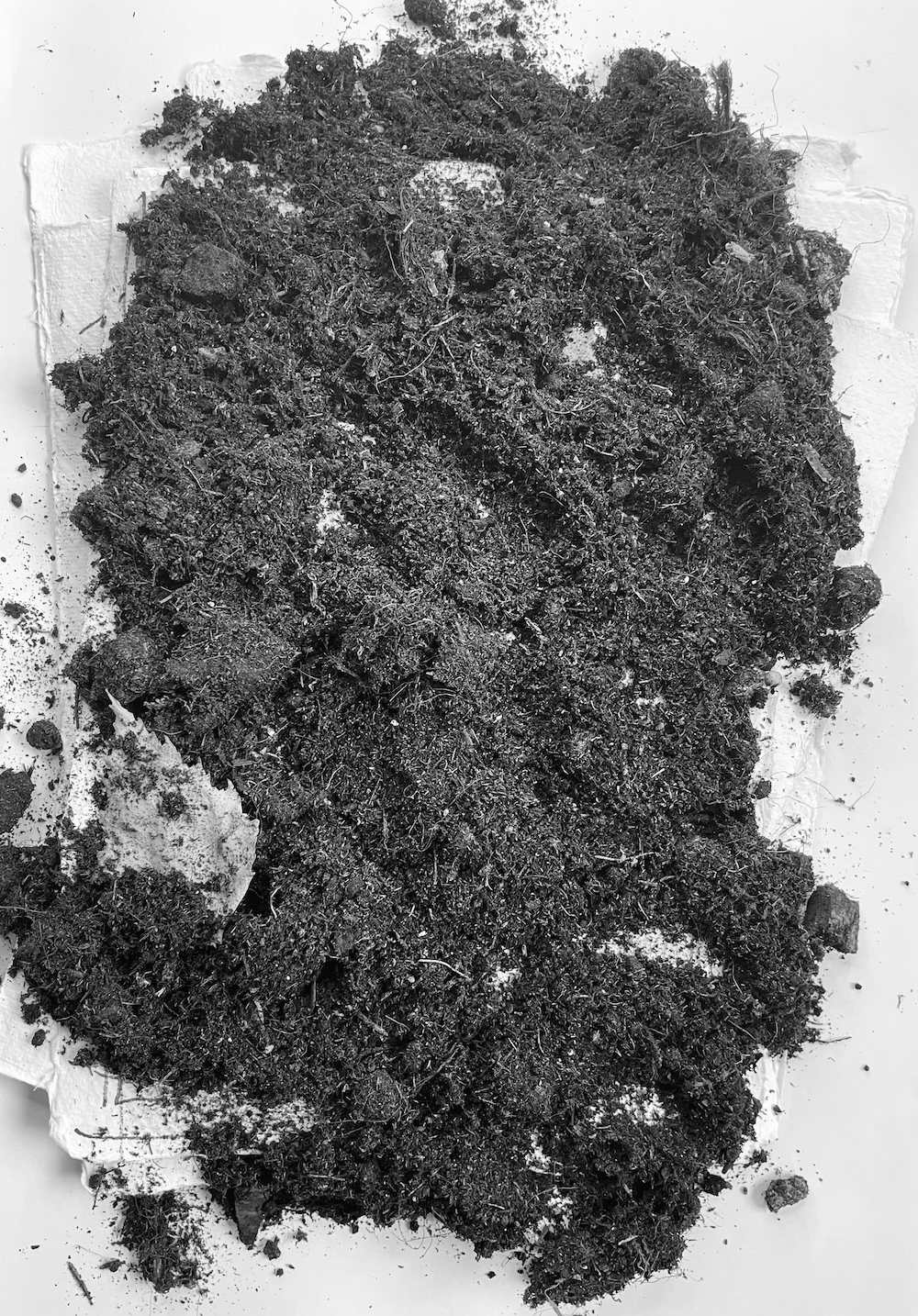
It all starts with a blank page
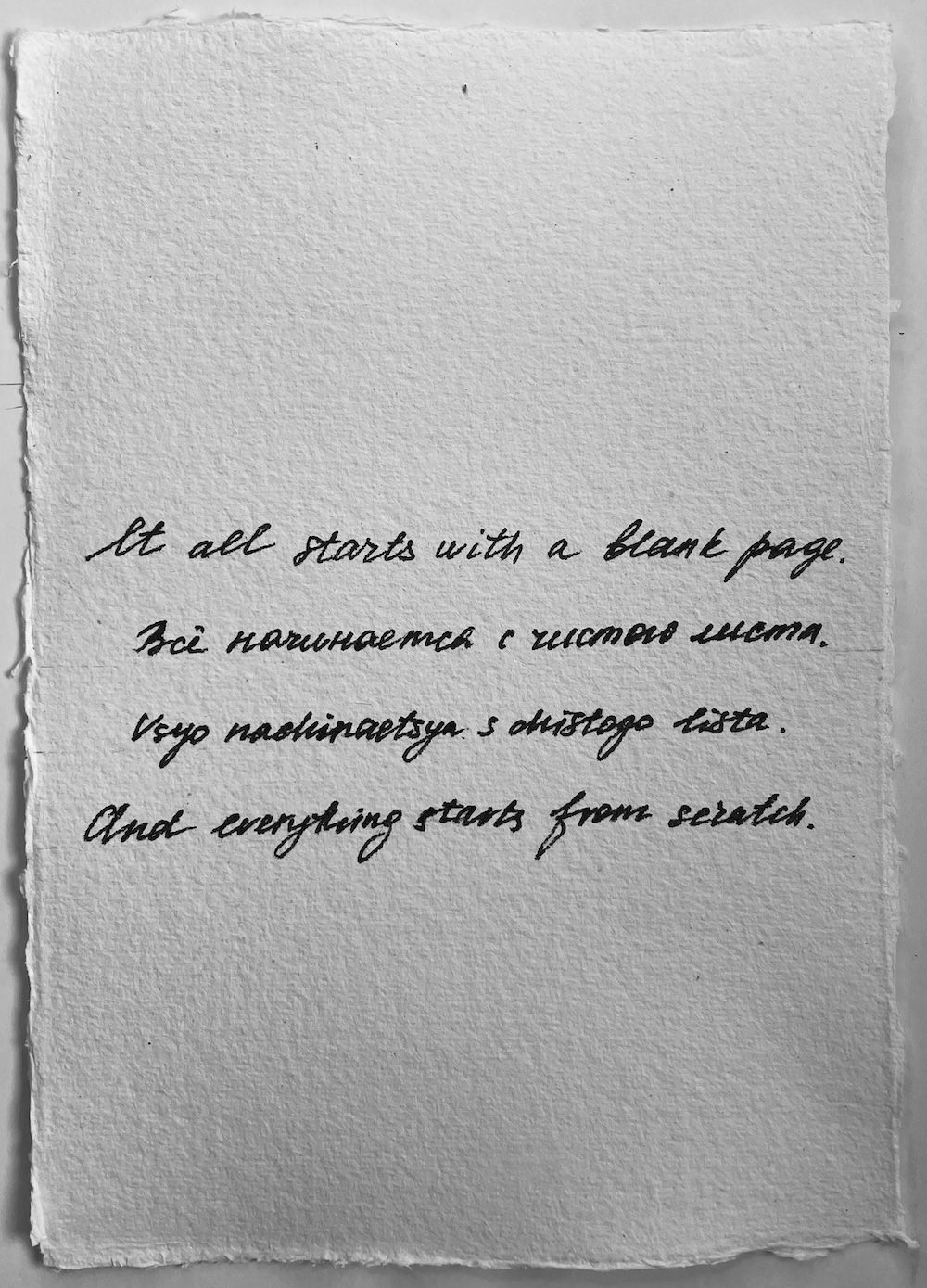
It all starts with a blank page.
          Всё начинается с чистого листа.
          Vsyo nachinayetsya s chistogo lista.
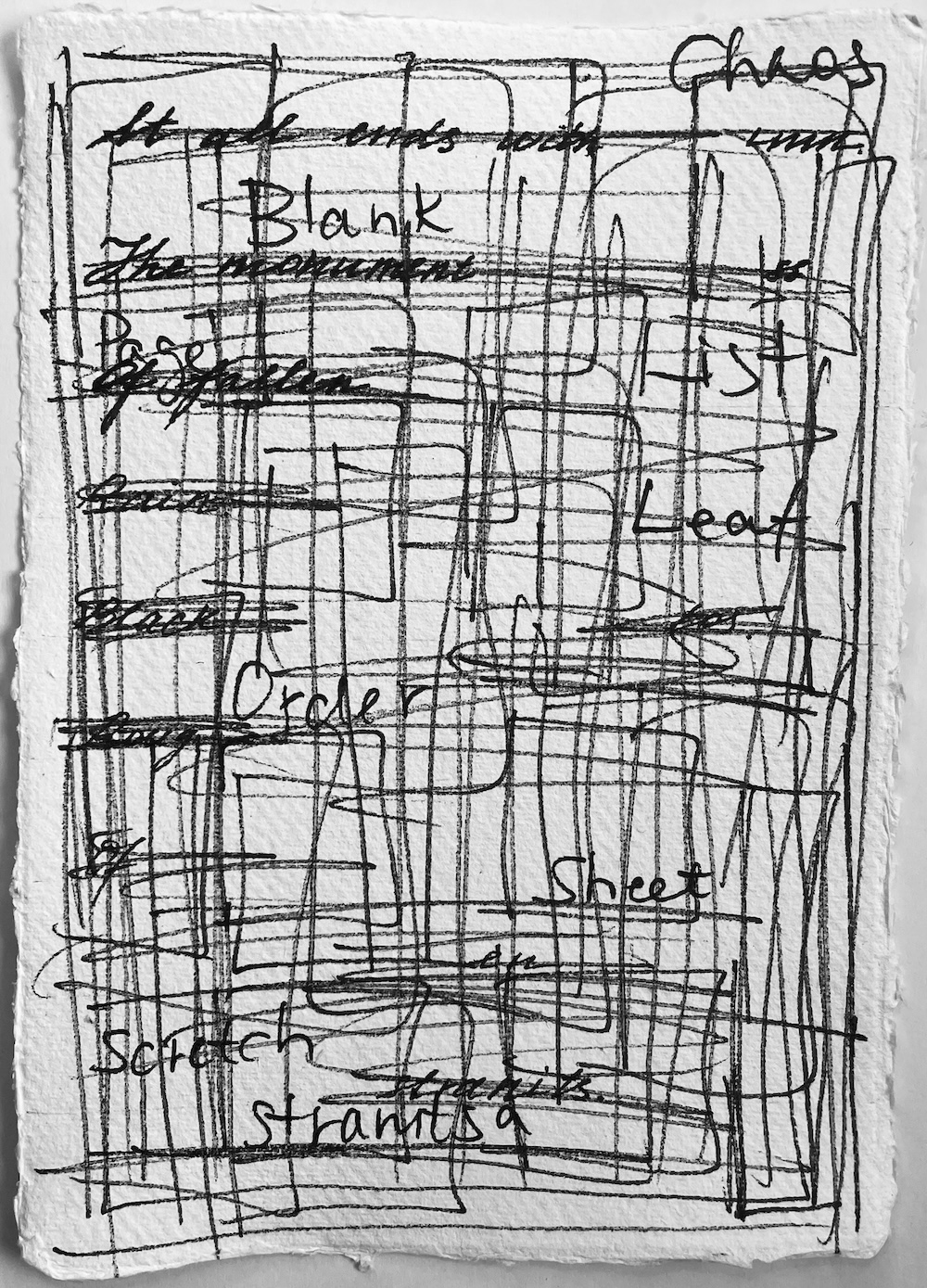
And everything starts from scratch.

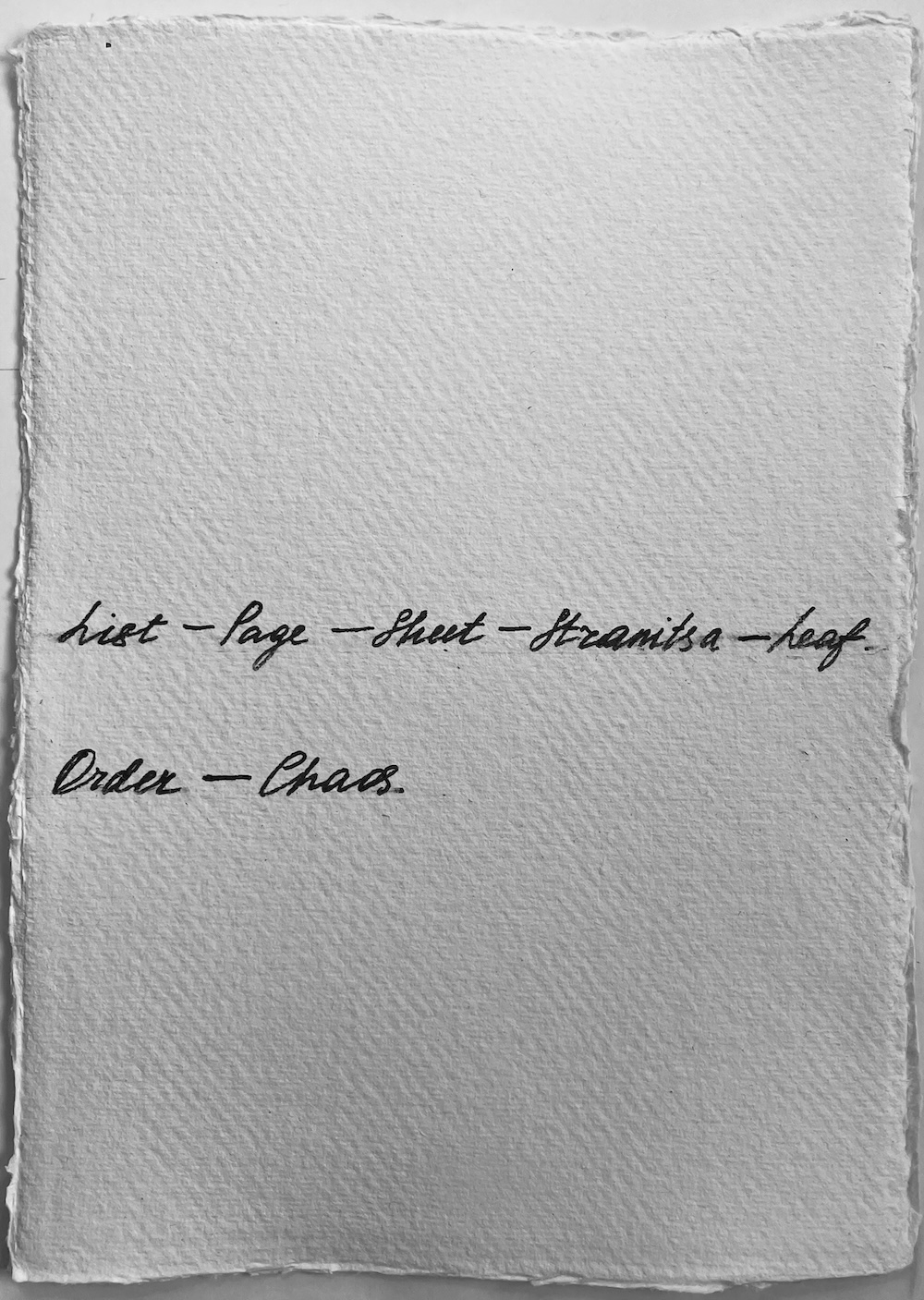
          List — Page — Sheet — Stranitsa — Leaf.
          Order — Chaos.

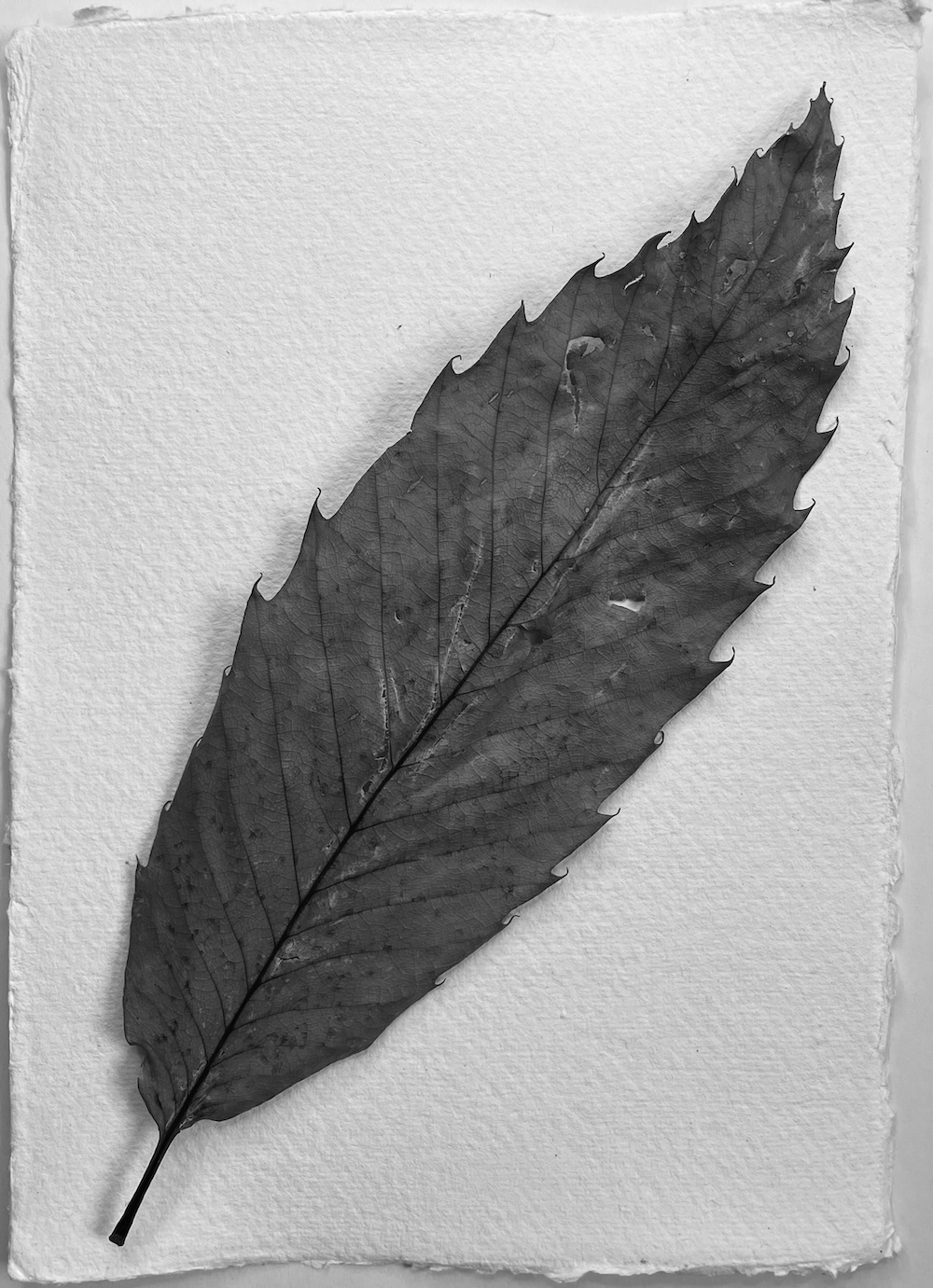
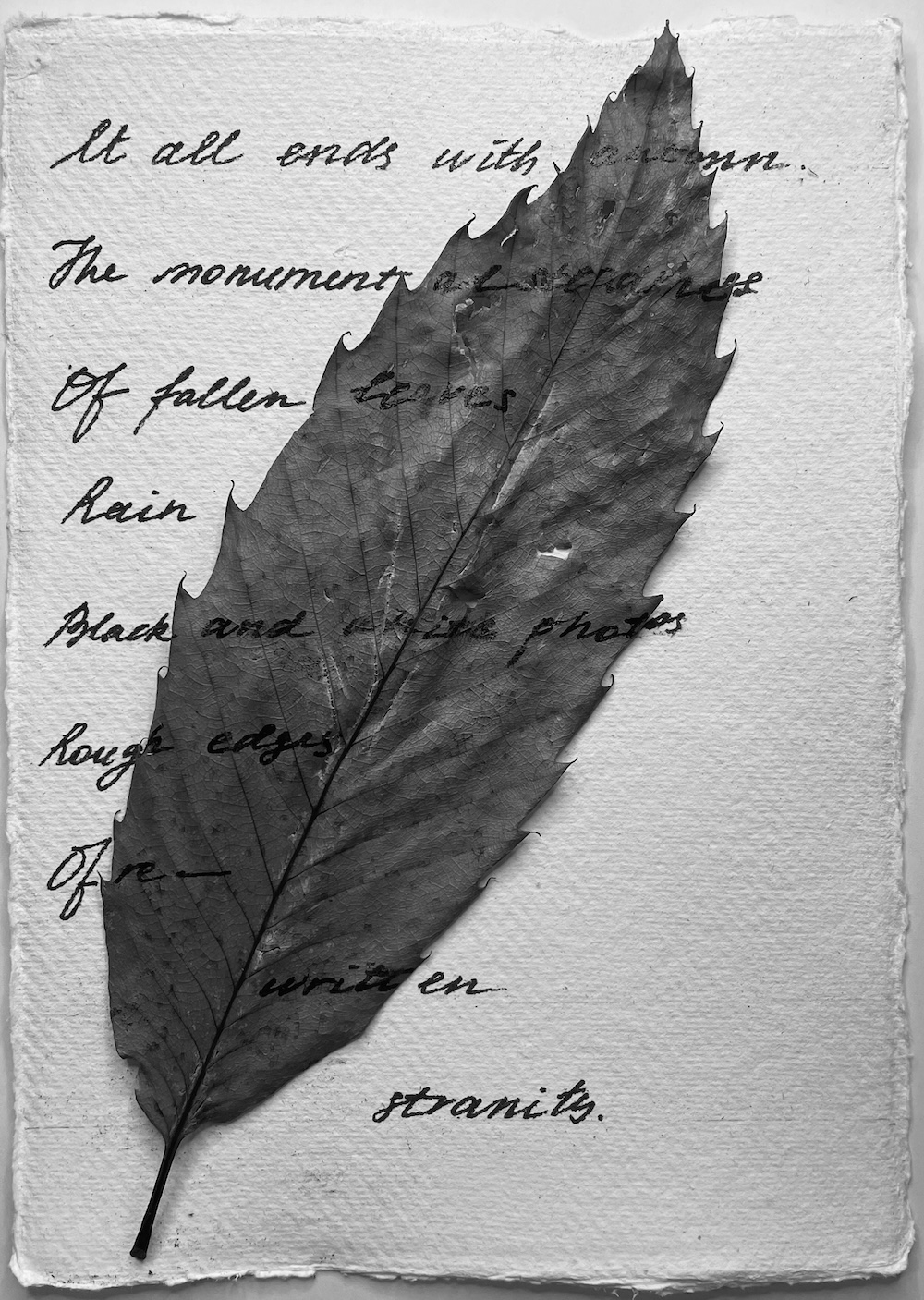
It all ends with autumn.
The monumental steadiness
Of fallen leaves.
Rain.
Black and white photos.
Rough edges
Of re —
          written
                    stranits.


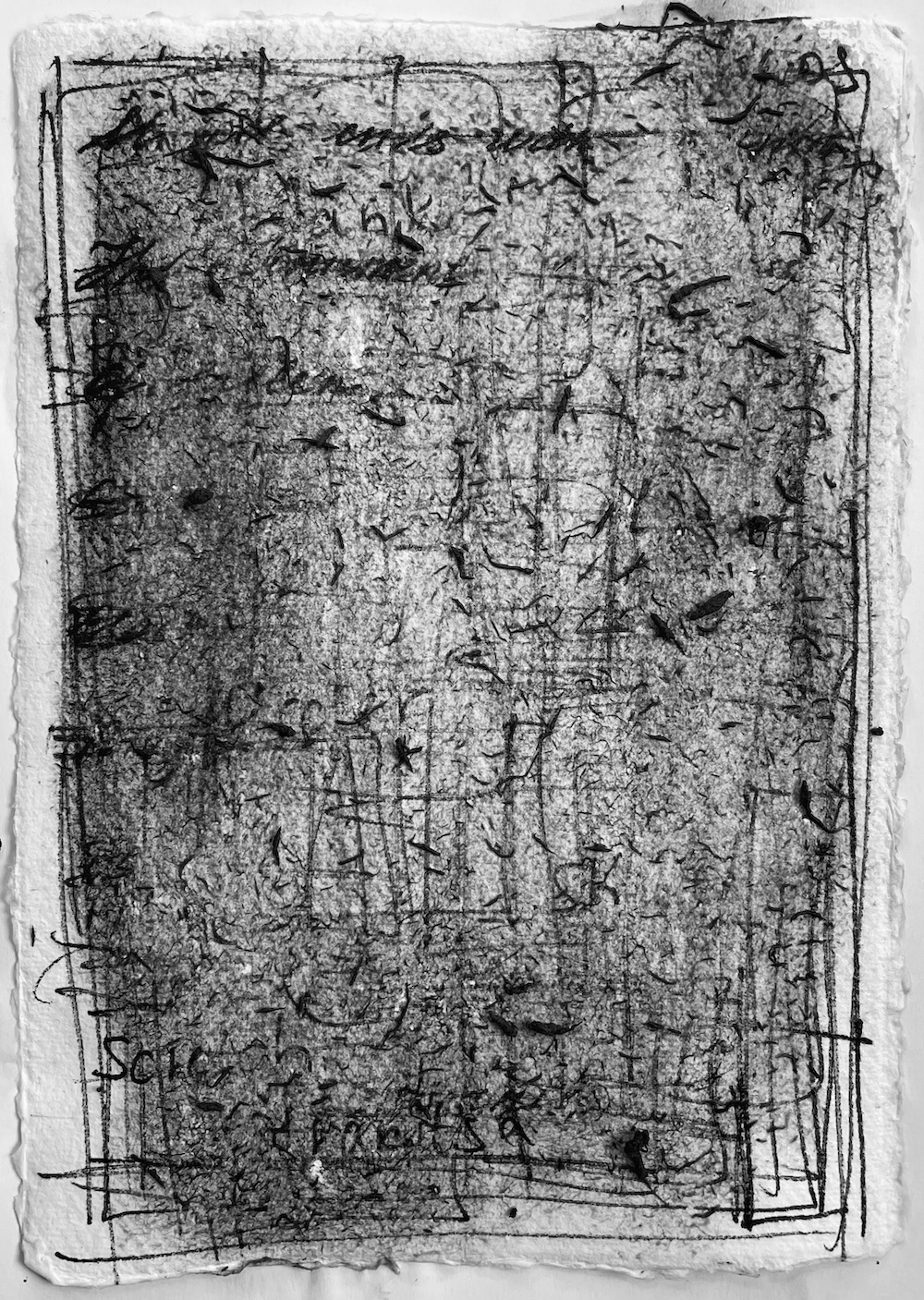
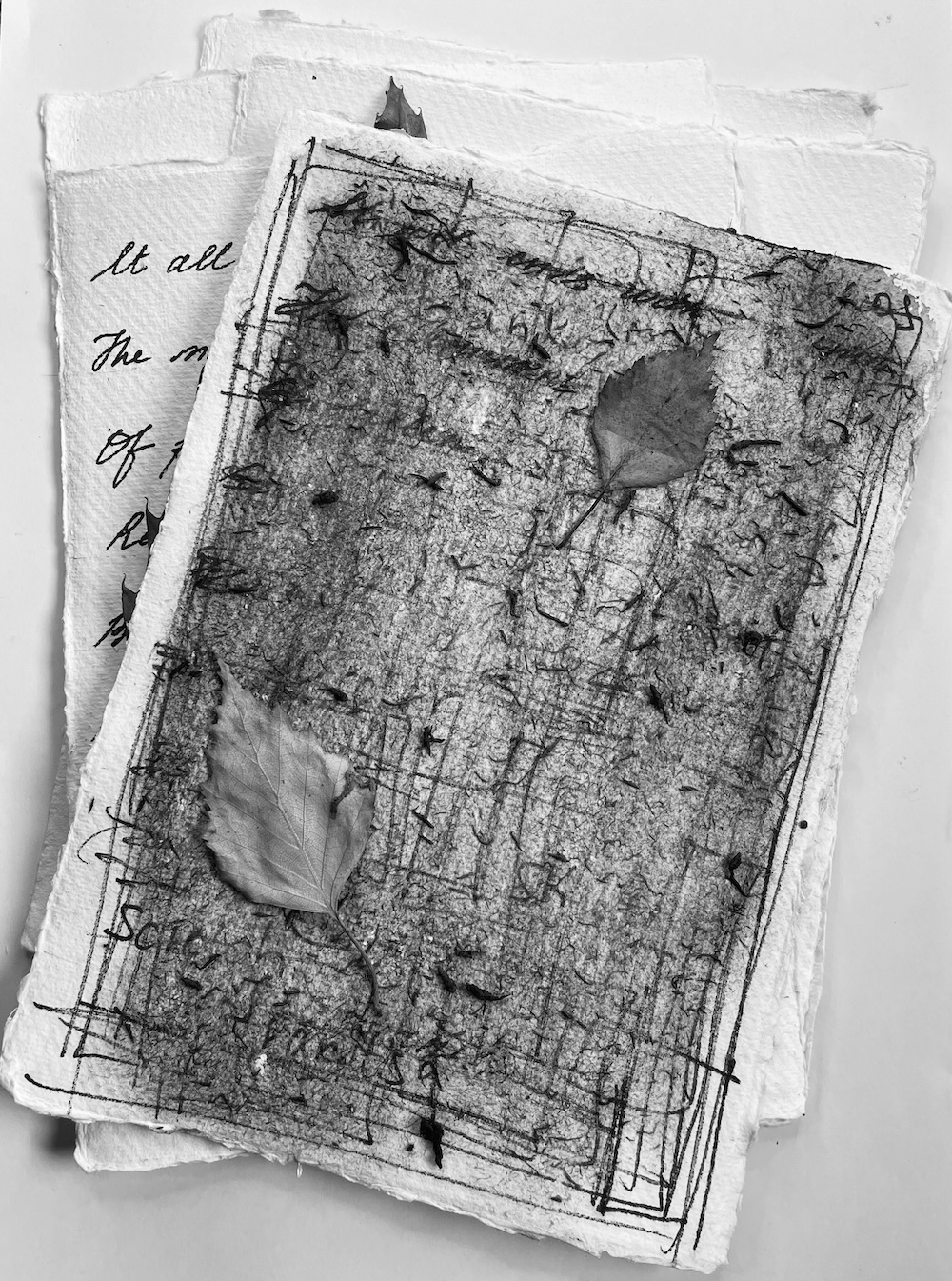
Mix-media: 100% cotton recycled paper, ink, pencil, leaves, rubber remains, water, soil.
Olga Kenton
Three Questions for Olga
What inspired your choice of medium(s), genre(s) and/or form(s) for your work?
Perhaps the strongest inspiration came from not writing anything for a while. Writers and artists do go through periods when everything feels as though it has been put on pause. This is both natural and inevitable; yet the danger appears when you suddenly realise that the pause has lasted far too long, and you want to climb out of that cocoon of unwritten words and unfinished projects. You can feel that ideas are bubbling in your mind, trying to find an escape and take shape. It is important not to miss that moment, and allow yourself at least to do some freewriting, or to return to whatever form you practise. In my case, I began by writing poetry, which is not the genre I feel most comfortable with, yet when I started toying with the ideas of “turning the page” and “starting from a new page”—the poetic form emerged organically. When I moved into the second stage of the project, I began thinking about how I could visualise the notion of creating something anew—and this led me to seek inspiration in language and words themselves, in nature, and in the materials that surround us.
What was your creative process?
Even before I had finished writing the poem, I knew that simply typing the words on a laptop would not be enough. Typing them felt unnatural. So I began looking for a medium that could emphasise the meaning of the words themselves. Taking imaginary steps backwards—from today’s digital world to a pre-digital era—I wanted to reconnect with the fundamental nature of writing. That is when the idea of using recycled cotton paper and ink emerged. I then began to explore paper itself—where it comes from and how we utilise it, often forgetting its natural origin. I think it is important to recognise that nature itself provides the means to create. Yet our relationship with it is chaotic—something I sought to capture through the creative process.
What is the significance of this work to you?
This project contains several layers of meaning, ranging from the fundamental concepts of life and death to the nature of creativity. I used recycled paper and soil to evoke the notion of the circle of life, but also to reflect the idea that the completion of something often feel like a micro-death. Additional meaning emerges through the blending of different languages and the exploration of words from semiotic and linguistic perspectives. I played with the multifaceted nature of language; it can mark both the beginning and the end of something. I explored the sounds and meanings of words, and how these meanings shift through translation and transliteration. For example, the word “list”—if it is used as a transliterated Russian word—means both “leaf” and “a flat sheet of material” (such as a piece of paper), evoking a certain linear structure, which is why words with related meanings appear together on a single line.
This project is ongoing, as I continue to explore these concepts through different media.
Olga Kenton is a writer and an early-career researcher. She holds a PhD in Creative Writing from the University of Birmingham, where she currently teaches in the Department of Modern Languages. In addition, Olga is a contributing lecturer at the Department of Film and Creative Writing. Her main research interests are Russian émigré literature, interviewing and creative nonfiction, literary hybridity, and translingual creative writing. Olga’s latest publications: The England We Know: Russian Voices Abroad (Academica Press, 2025).
Next (Ode to Jackson Pollock) >